S&ST · 2019
Design impacts for launching the platform
- UX
- Research
- Design systems
- Process
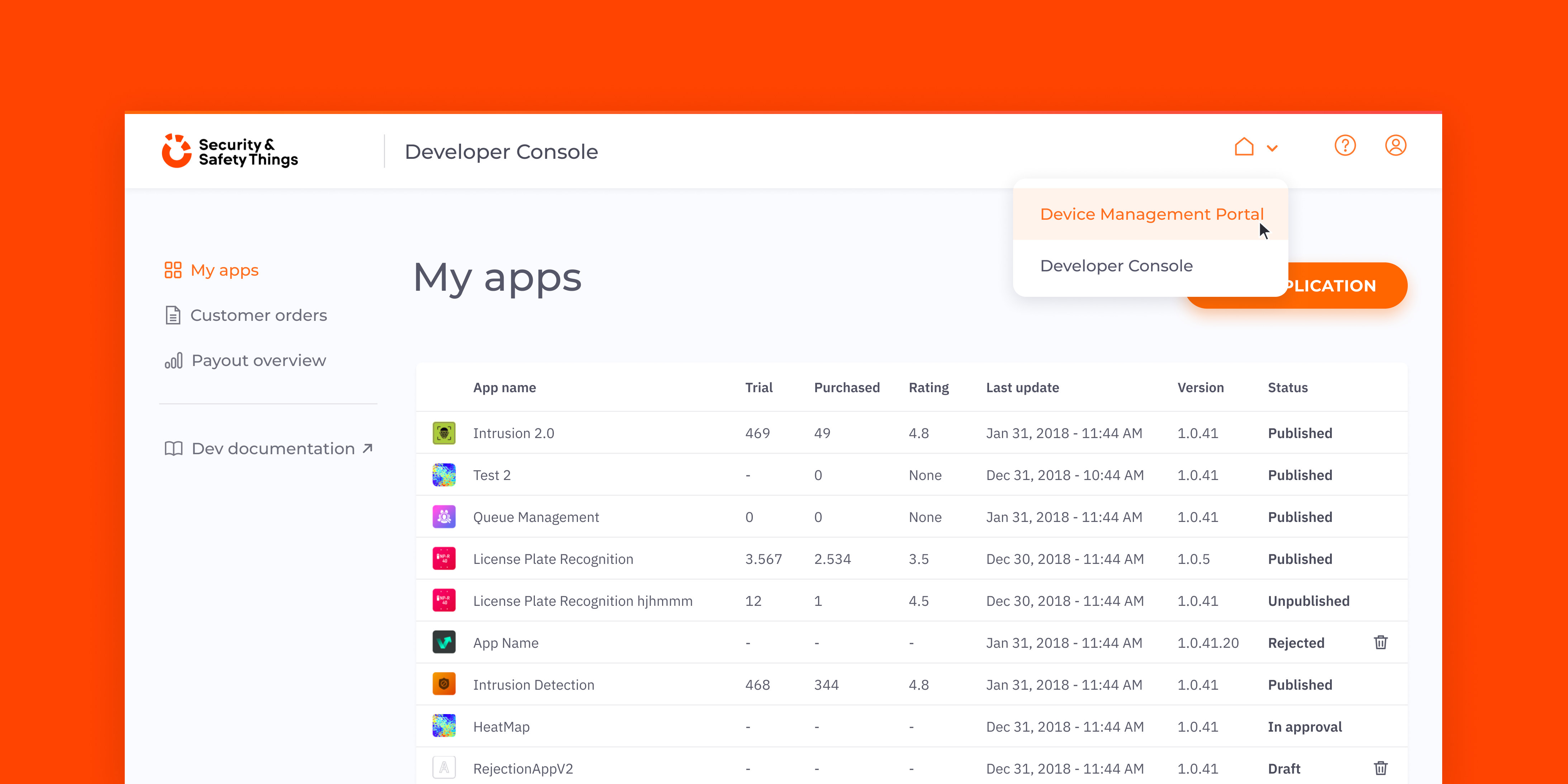
Security & Safety Things was a Bosch IoT start-up for the B2B security industry. Its platform let businesses turn security cameras into smart cameras that run AI-driven apps from an application store — and let developers build those apps and sell them in the store.
This is a record of the design impact leading up to the platform launch: taking products in a challenging state, on a very tight schedule, and turning them into products people enjoyed using.
Over nine months I fostered new collaboration models, updated our tools, introduced process frameworks, and pushed the design team — and everyone around it — to work together on a better user experience while keeping it feasible and viable.
Outcomes
What we did
- User journey mapping
- Heuristic analysis
- Facilitating user testing
- Building cross-product prototypes
- Synthesising research outcomes
- Research training for PMs and POs
- Defining product roadmaps
- One scrum board for design, PMs and POs
- Refining and training on writing user stories
- Optimising collaboration with PMs and POs
- Evolving the collaboration model with engineering
- Facilitating cross-disciplinary collaboration
- Introducing Figma
- Establishing daily design reviews
- Building a design system
- Refining sprints, sprint reviews and retrospectives
Improved user experience
Taking a holistic look at the full experience across products, and establishing different research methods to assess gaps in it.
-
Discover
- Company website
- Online articles
-
Sign up
- User Management Portal
- Account Page
-
Purchase app
- Application Store
-
Install / configure app
- Device Management Portal
- Device Management Tool
- Camera Web Interface
-
Maintenance
- Device Management Portal
- Device Management Tool
-
Research methods
- Heuristic analysis
- UX journey assessment
- User testing
-
Synthesis
-
Backlog
#1 — Heuristic analysis
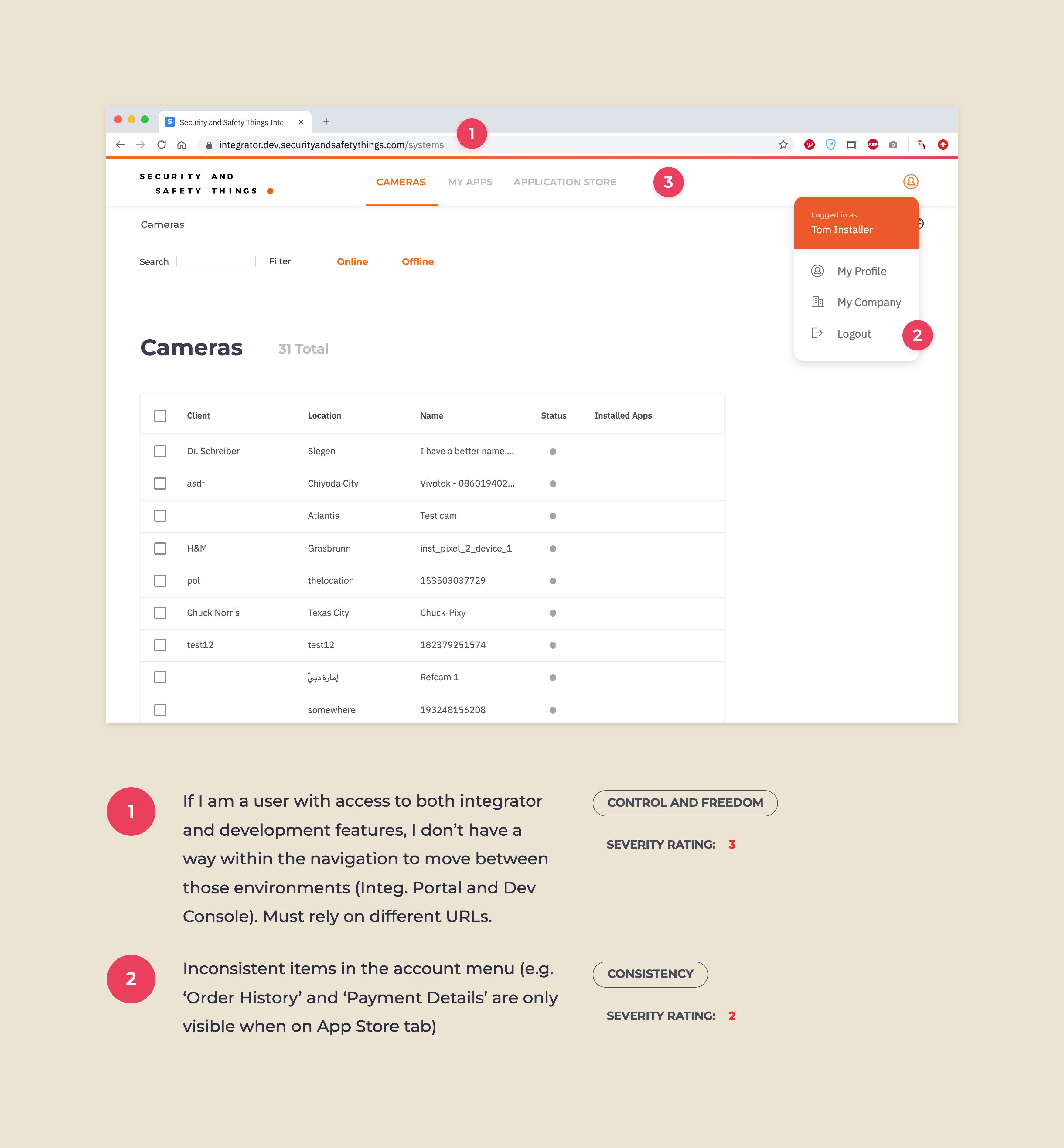
We used a standardised heuristic analysis framework based on Jakob Nielsen’s ten usability heuristics.
Issues were rated on frequency, impact and persistence. Those with higher severity were prioritised for the launch; the rest went into the backlog.
#2 — User journeys
Mapping the end-to-end journey for integrators and developers, then assessing it to identify gaps and opportunities for improvement.
Every journey was reviewed and its outcomes documented as stories in the backlog. We prioritised which issues to address before launch, and the journeys also set the focus areas for user testing.
#3 — User testing
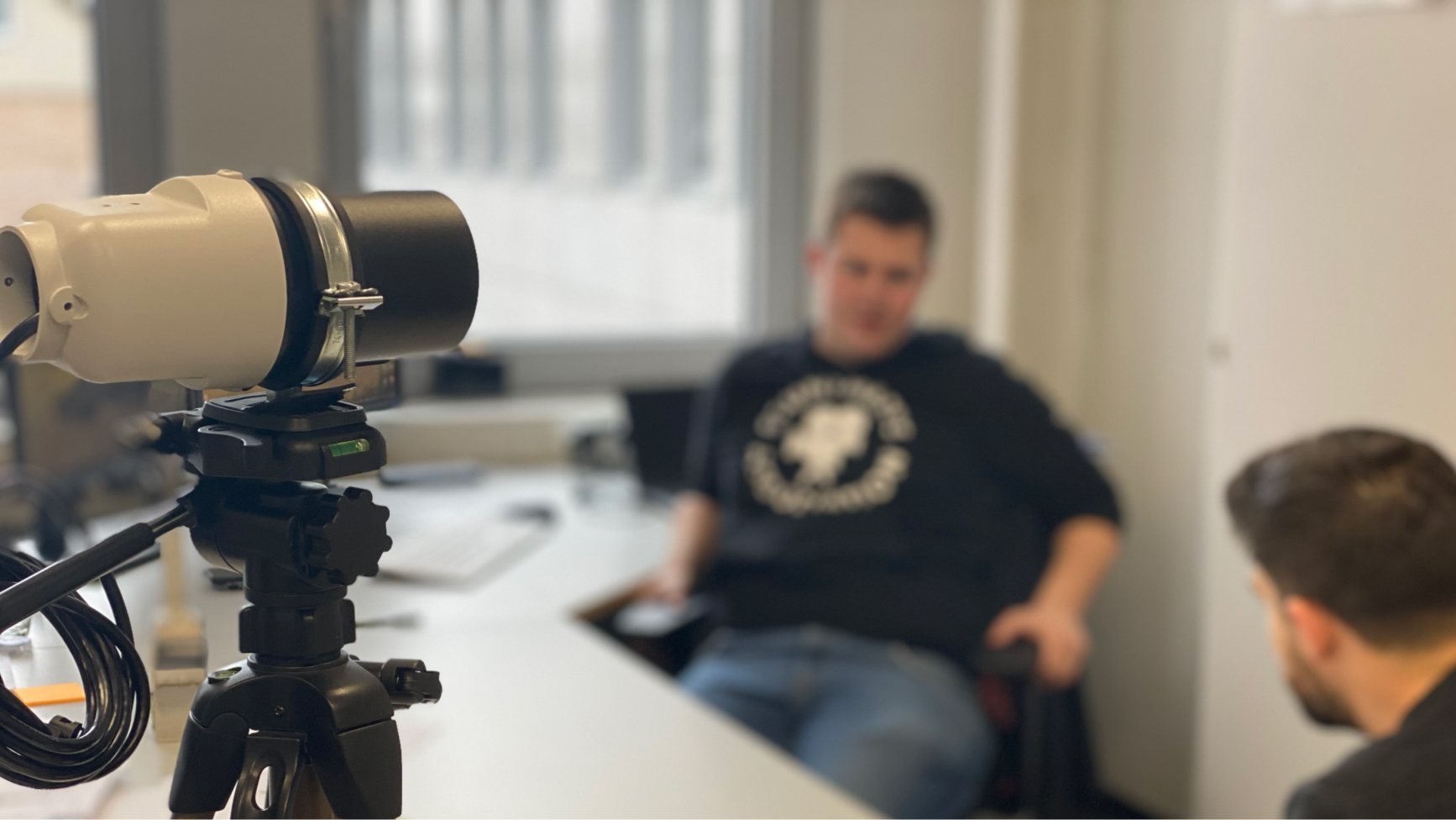
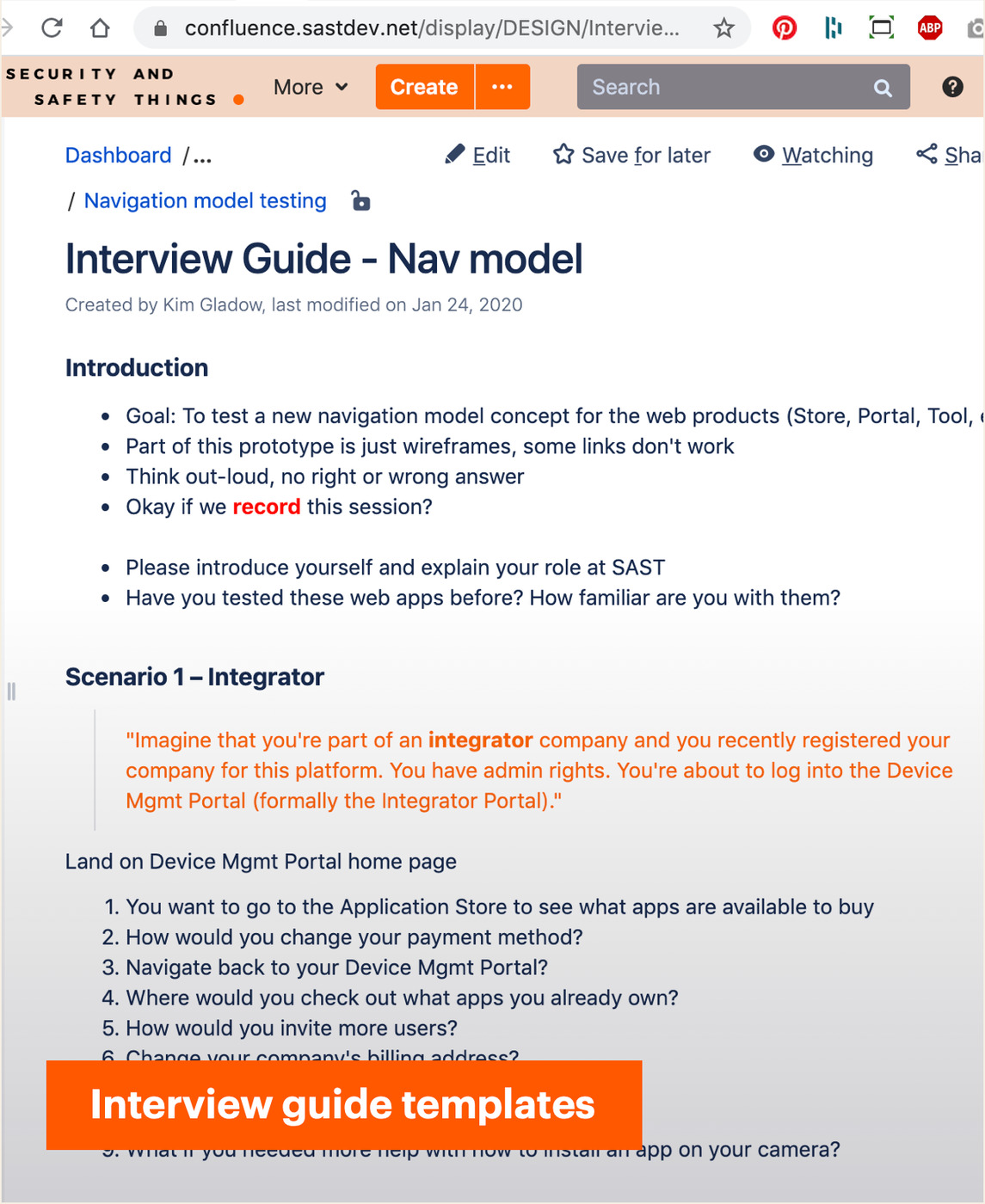
Facilitating user testing of key flows and evaluating the new navigation model, using cross-product interactive prototypes. Participants worked through core tasks in the prototype while we observed — making sure cross-product experiences were tested, and prioritising the key issues to address before launch.
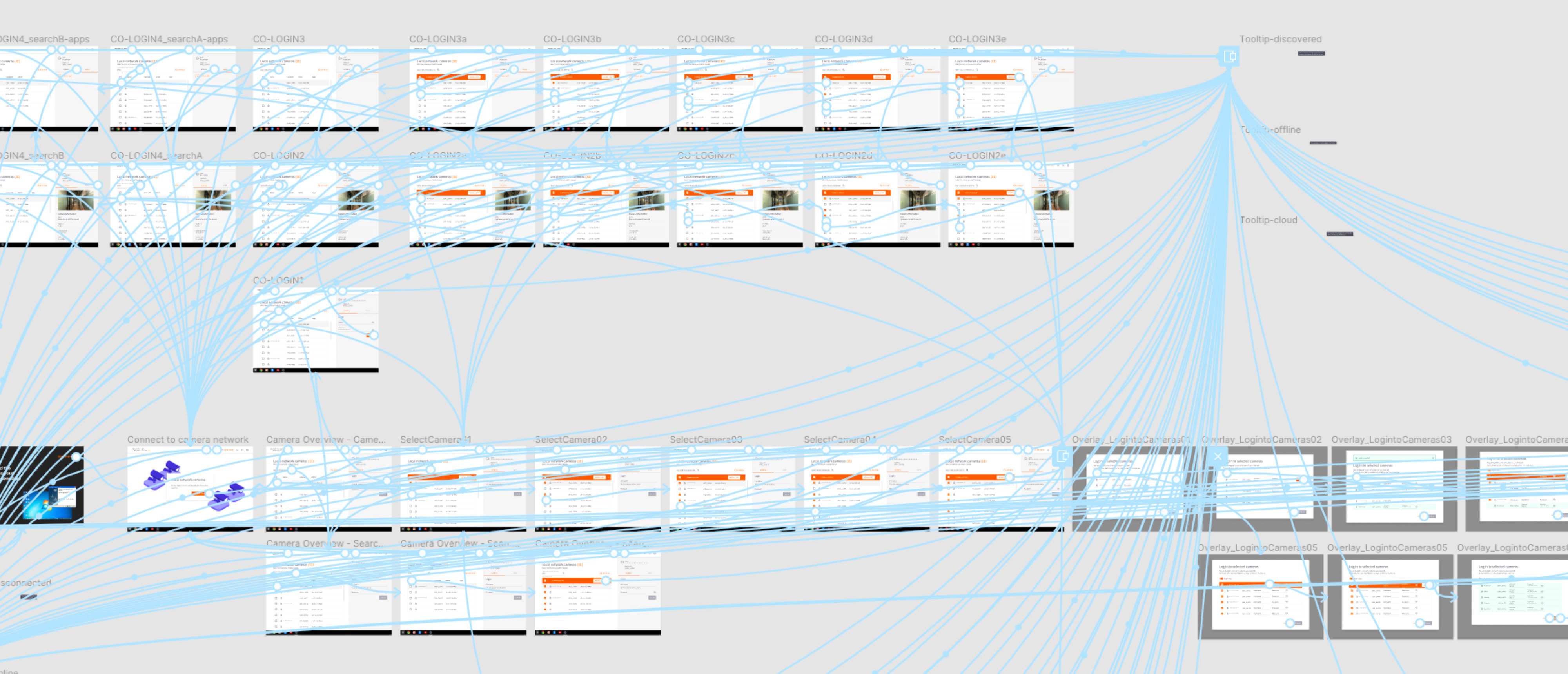
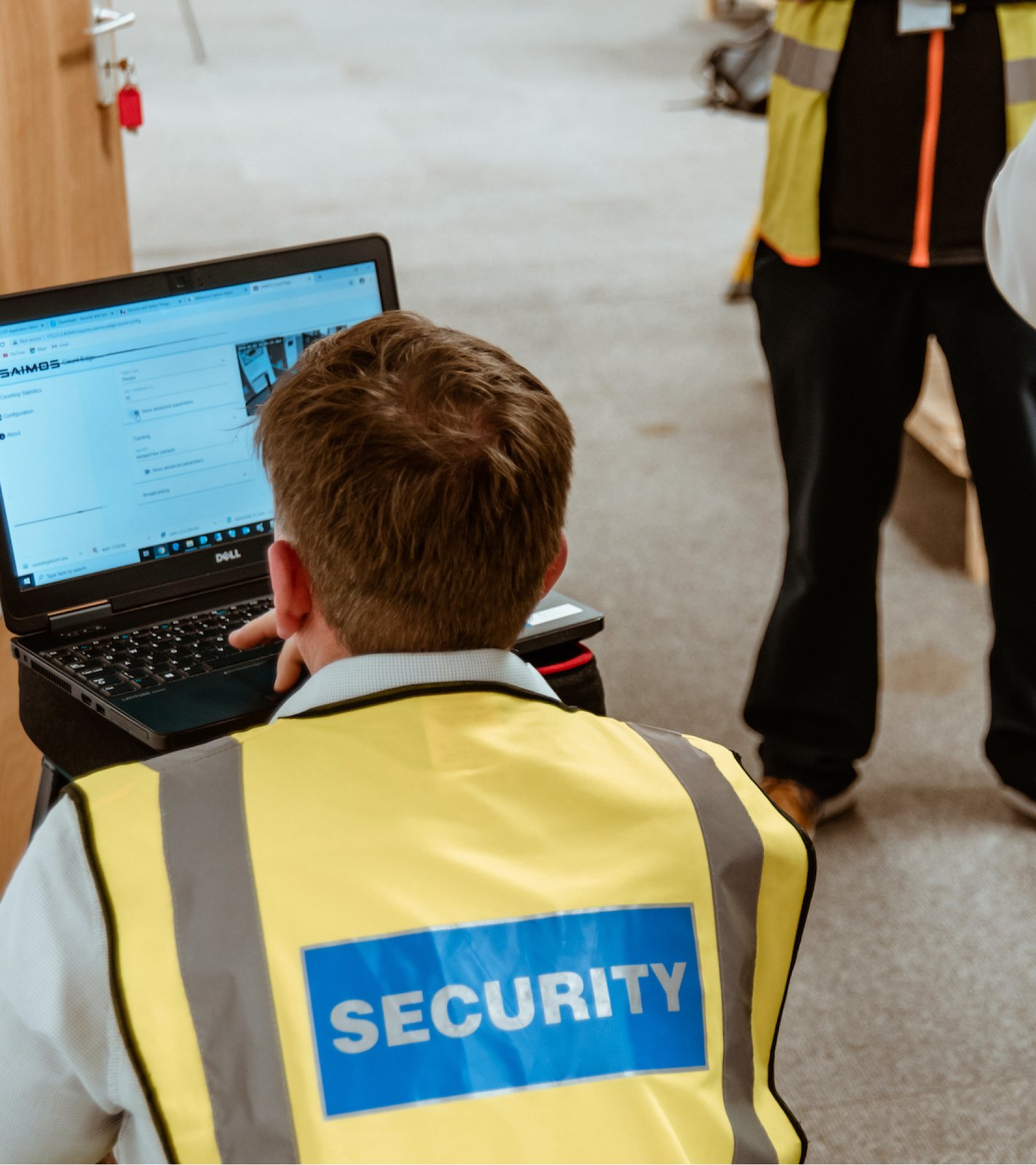
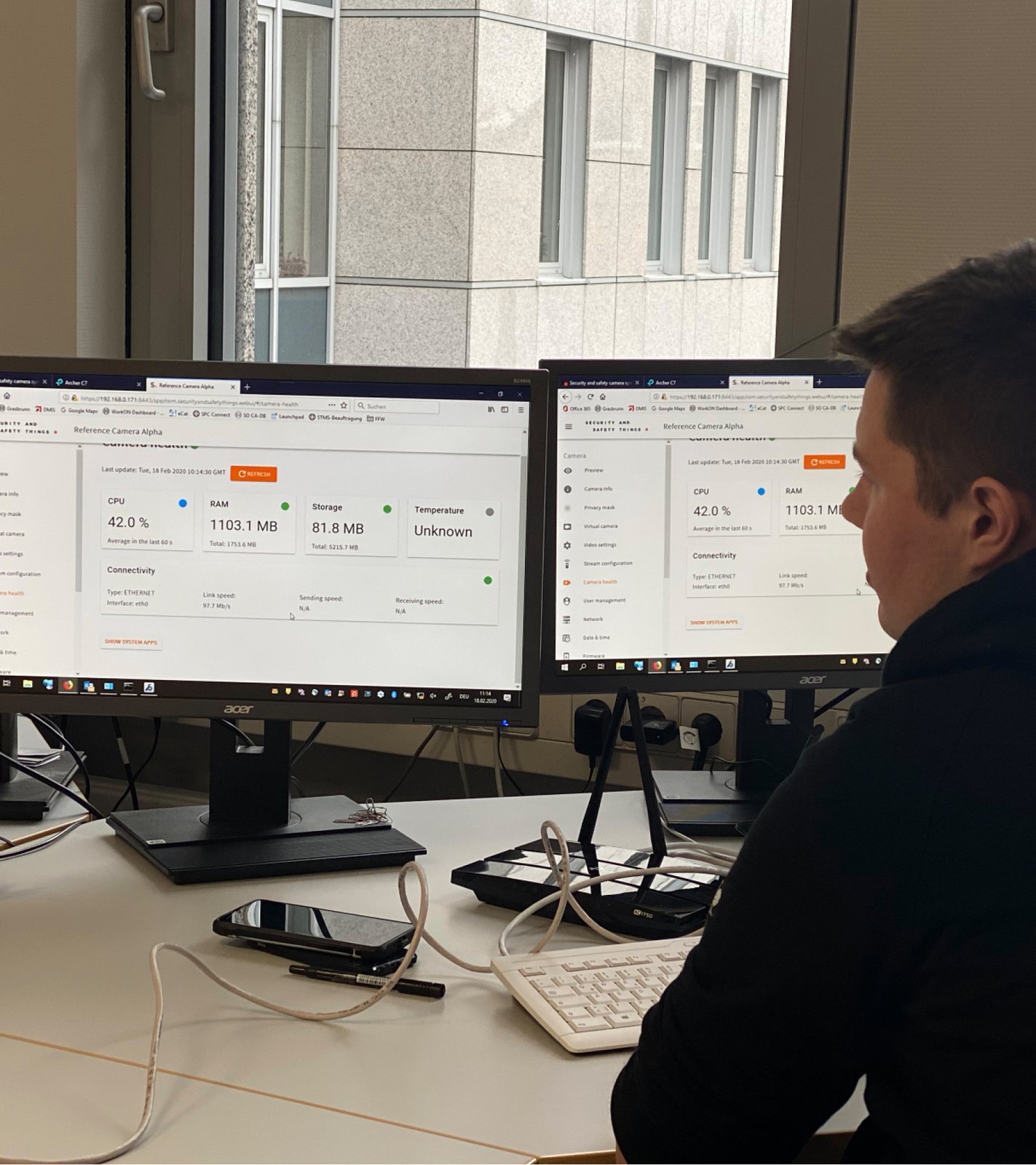
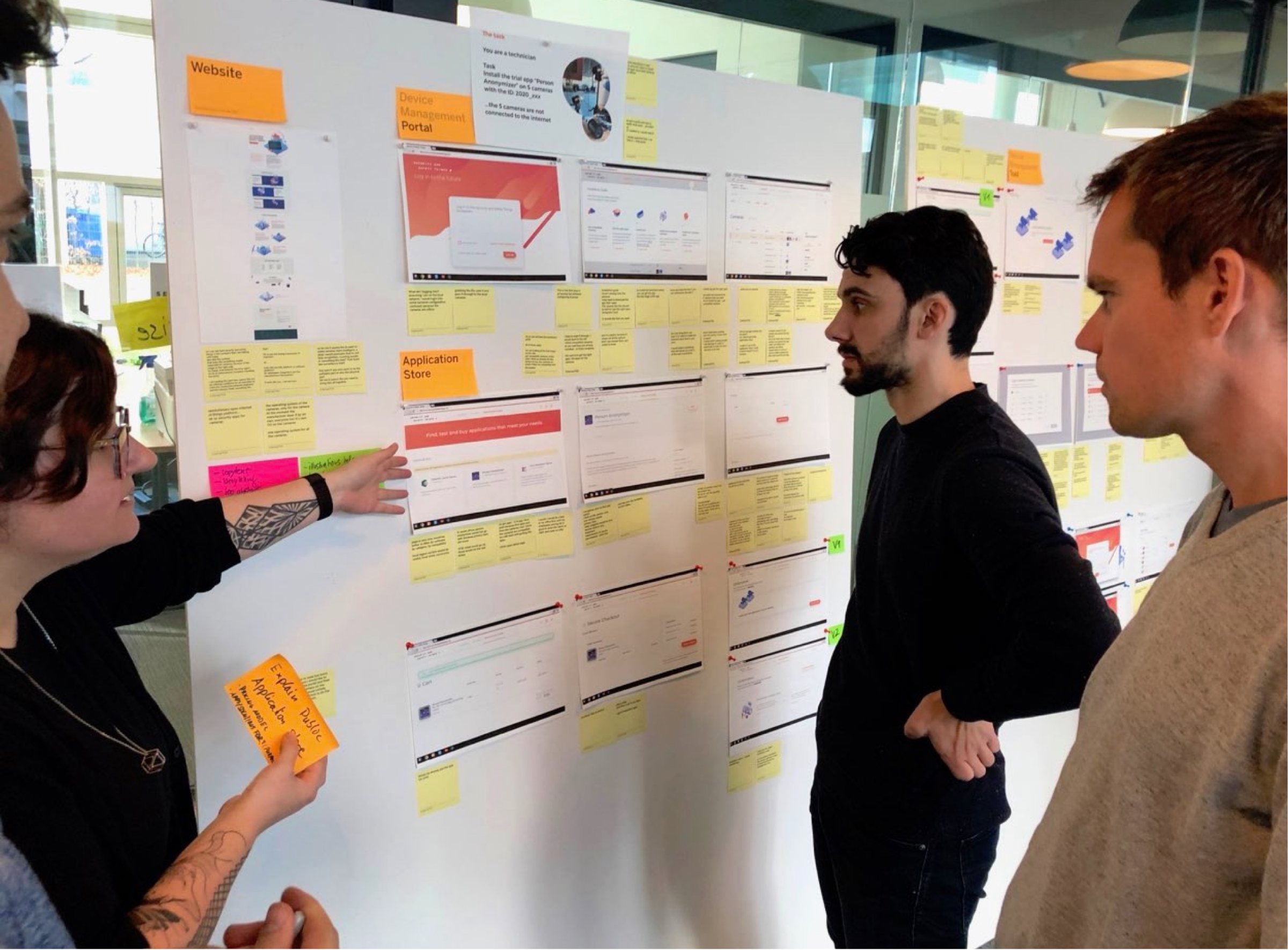
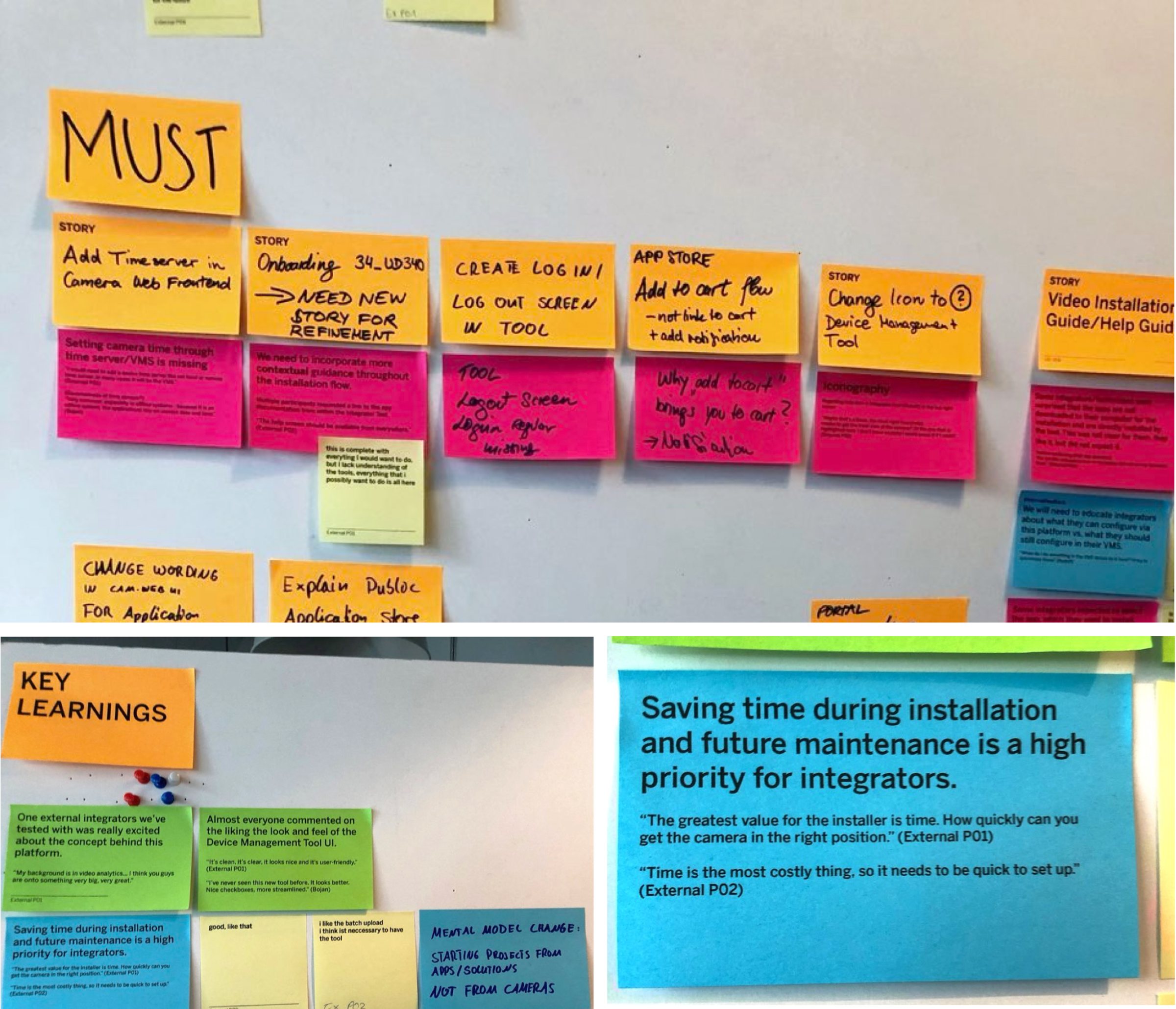
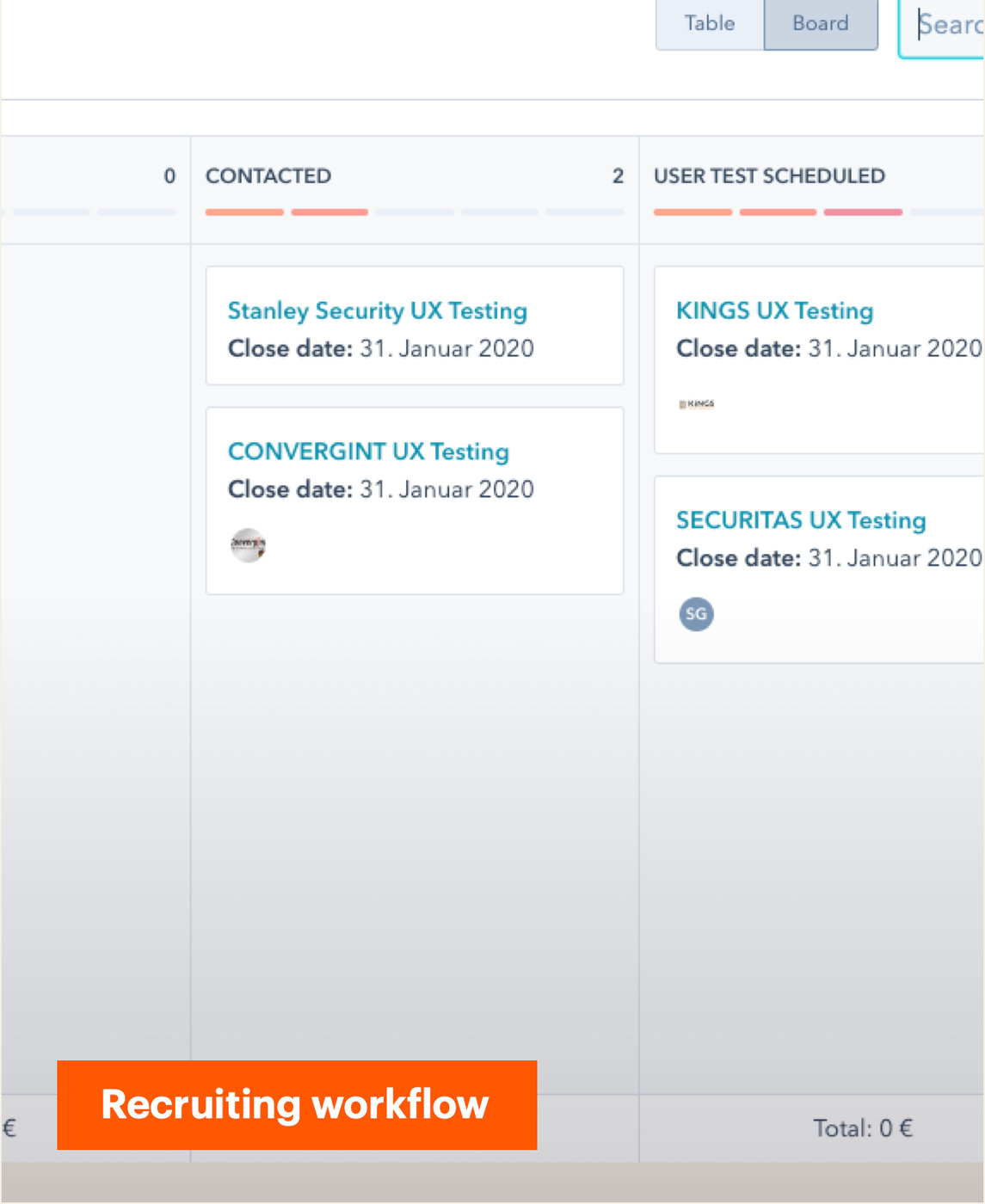
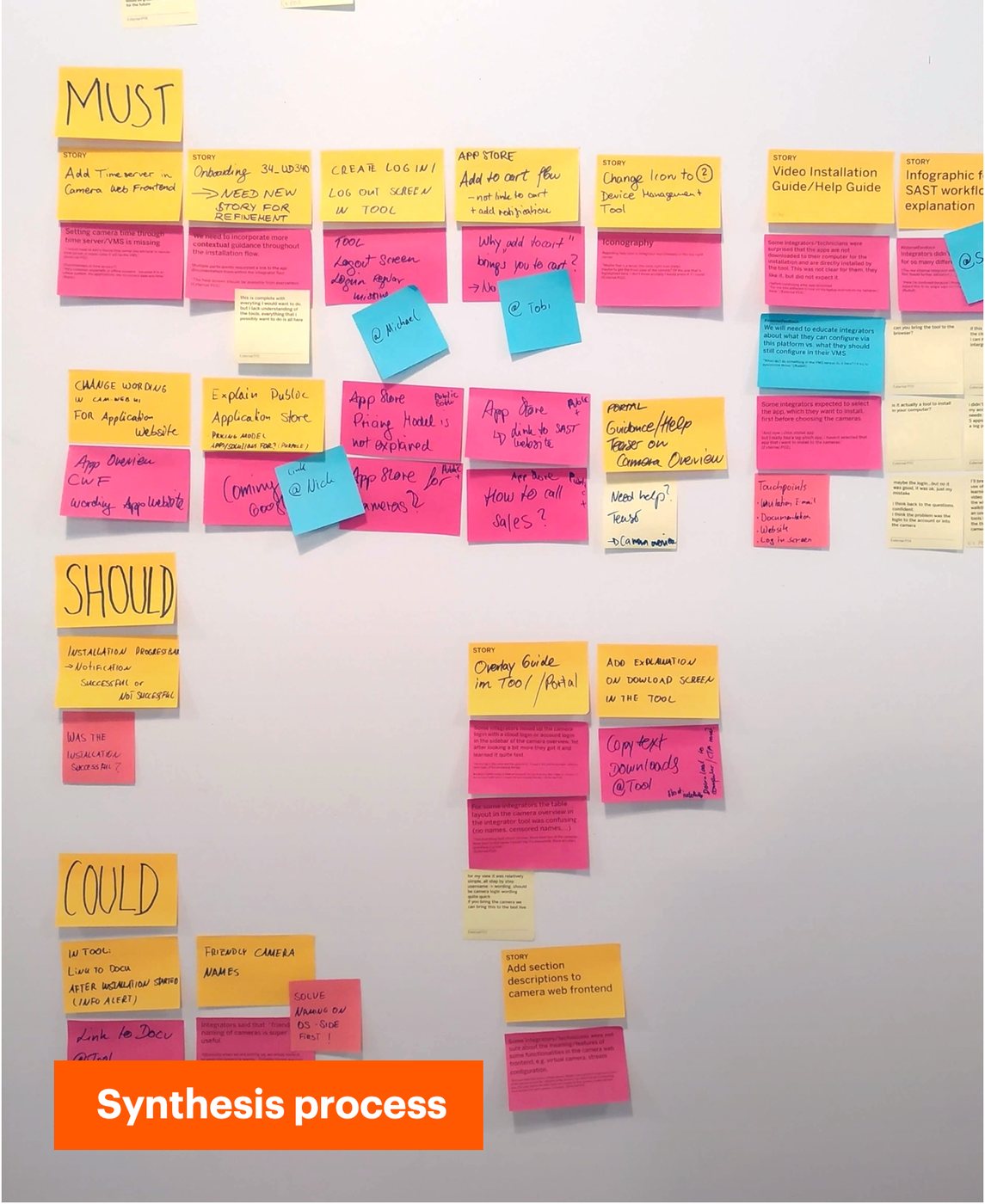
The design team synthesised the raw testing notes together, then worked with the POs and PMs to prioritise which issues could be addressed for the launch. Along the way we set up a repeatable framework for user testing.
Increased quality of design
Improved navigation model
Switch between products from one shared navigation.
“Now I don’t know where I am — how do I go back to where I was?”
Product differentiator
Log in to multiple cameras with one set of credentials.
“I usually have to log in manually for each camera — it takes so much time, and it’s a hassle to organise all the information.”
User guidance
Guidance at every step: a getting-started checklist, then clear next steps after each purchase.
“What is this platform I just joined, and how do I get started using it?”
“Where can I find the app I’ve just purchased? How do I install it on the camera?”
Navigation & information architecture
A clearer information architecture, so developers know where to start.
“I am getting lost in a sea of information, not sure where to start…”
Sales tracking & payout
Track orders and payouts in the console, not in spreadsheets.
“I spend way too much time organising my orders and payments in Excel sheets…”
Optimised processes
Future features
Training PMs and POs in different types of design research, to explore future opportunity areas.
Product roadmaps
Working with PMs to define product roadmaps that prioritise customer needs, and guiding POs on which features to prioritise for design and development.
One scrum board
Unifying separate boards into one and encouraging PMs and POs to own it. Aligned prioritisation means the topics that bring the most value to customers and partners — and to the business — come first.
Backlog refinement
Training and guidance on writing user stories from the user’s perspective, and revising the existing backlog to improve sprint velocity and collaboration.
Collaboration model
Optimising the collaboration model with PMs and POs: guiding them to own a vision, supporting them in writing user stories from a user perspective, and having POs prioritise user stories for design.
Design & development
A first step from a feature-driven approach towards a user-centric, more dynamic collaboration model. The design team works two sprints ahead of development and outputs new or updated stories.
Cross-disciplinary
Bringing PMs, POs, engineers, sales and marketing to the same table — and the same Figma file — to share, align, ideate and prioritise across topics. It maximised what design could deliver.
Design review
Giving the team regular opportunities to present and critique one another’s work, and making sure design solutions stay aligned with each other.
Figma
A framework for documenting designs directly in Figma, rather than copying them into Confluence and describing every interaction guideline there. It cut documentation time in half.
Design system
Building a design system for speed and better collaboration — components designed and coded systematically to accelerate delivery and strengthen how design and engineering work together.
Sprint process
Refining the sprint process, sprint reviews and retrospectives. Sprints went from three weeks to two, and sprint reviews from two hours to one. Bi-weekly retrospectives collected feedback on how to keep improving the collaboration model.
More work
Have a project in mind?
Say hello